
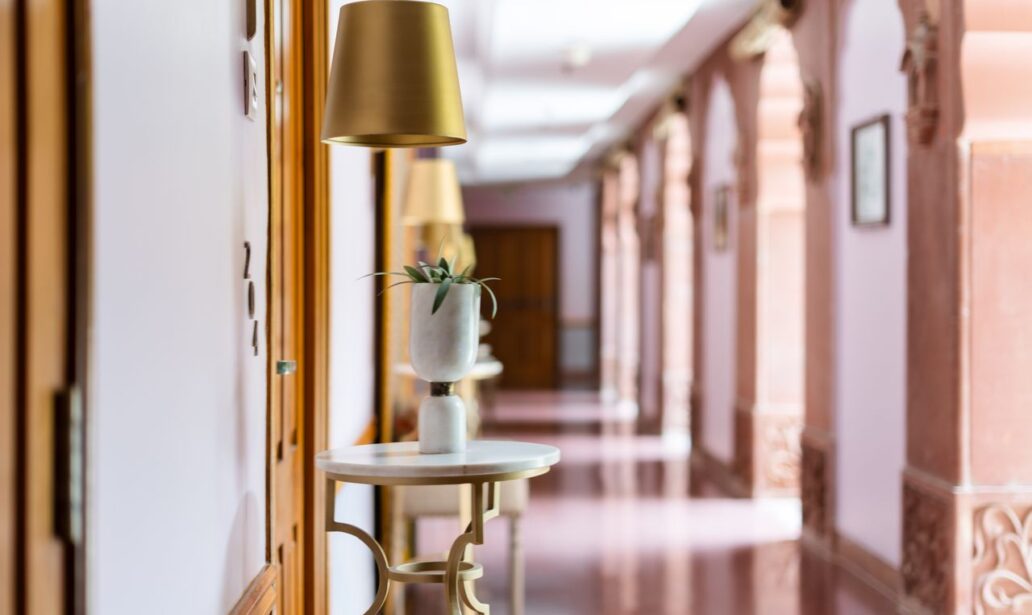
A beautiful home does not necessarily need to look perfectly coordinated. In fact, some of the most inviting interiors are spaces that feel as though they have evolved over time. A vintage chair sits beside a contemporary sofa, artwork has a story behind it, and different materials and textures work together without everything matching.
This is the difference between a home that feels collected and one that simply feels decorated.
Creating that feeling does not require filling every room with antiques or spending a fortune on furniture. It comes down to making thoughtful choices, incorporating pieces with character, and allowing the home to reflect the people who live there.
Start With the Architecture
Before choosing furniture, consider the character that already exists in the home.
Architectural details such as original wood floors, exposed beams, arched doorways, decorative molding, stonework, or large windows can provide a natural foundation for the interior. Rather than covering these features with layers of decoration, use them to guide the overall design.
For example, a historic home may benefit from furnishings that acknowledge its original character while introducing modern elements for everyday comfort. A newer home can achieve a similar sense of depth through carefully selected materials, lighting, furniture, and artwork.
The goal is to make the furnishings feel connected to the space rather than placed inside it.
For homeowners looking for professional guidance, working with experienced interior designers can also help bring these different elements together. A thoughtful designer can consider the architecture, lifestyle, materials, furnishings, and personal preferences as parts of one cohesive vision. Firms such as Magali Sonterre approach interiors with an emphasis on creating spaces that feel personal, considered, and connected to their surroundings.
Mix Old and New
One of the easiest ways to make a room feel collected is to avoid buying everything from the same collection or time period.
Pairing contemporary pieces with vintage or antique furniture creates contrast and gives the room a sense of history. A streamlined sofa might work beautifully with an older wood coffee table. Modern lighting can highlight a traditional dining table, while contemporary artwork can bring energy to a room filled with classic architectural details.
This approach also makes a home feel less temporary. Trends come and go, but a mixture of eras tends to create an interior with more staying power.
Choose Materials With Character
Materials can have just as much influence on the personality of a room as furniture.
Natural wood, stone, linen, wool, leather, ceramic, metal, and other tactile materials can introduce variation without relying on bold patterns or excessive decoration. Materials that develop character with age can be particularly effective because they become part of the home’s story.
Instead of choosing every surface for perfect uniformity, consider how materials will interact with one another. The warmth of wood can soften stone. Textured fabric can make a room with hard surfaces feel more comfortable. Aged metal can provide contrast against clean architectural lines.
These small differences create visual depth.
Give Every Room Something Personal
A collected home should say something about the people who live there.
That might mean displaying books that are actually read, artwork gathered during travels, family photographs, inherited furniture, ceramics from a favorite artist, or objects that have personal significance.
Not everything needs to have a carefully curated origin story. Even ordinary objects can contribute to a home’s character when they are meaningful to the people living there.
Rather than asking whether an object is currently fashionable, ask whether it belongs in the story of the home.
Avoid Overmatching
Matching furniture sets can make a room feel organized, but too much coordination can also make an interior feel predictable.
Instead, look for relationships between pieces rather than exact matches. Furniture can share a similar color or material without being identical. Different wood tones can work together when there is enough contrast and repetition throughout the space. Upholstery can vary while maintaining a consistent overall palette.
Interior designers often approach this by considering the room as a composition rather than a collection of individual products. Each piece has a role, but the pieces do not necessarily need to look like they were purchased at the same time.
Use Color as a Connecting Element
A collected interior does not have to be colorful, but it should have some visual relationships between rooms.
One approach is to select a relatively restrained base palette and introduce color through artwork, textiles, furniture, and accessories. Another is to repeat certain tones in different parts of the home.
For example, a muted green might appear in a piece of artwork, a chair, and a decorative object. These repetitions subtly connect the spaces without making them feel identical.
Color works best when it supports the architecture and furnishings rather than competing with them.
Let the Home Evolve
Perhaps the most important part of creating a collected home is resisting the urge to finish everything immediately.
A home can become more interesting as new pieces are discovered and existing pieces are rearranged. A chair inherited from a relative might eventually find its place in the living room. Artwork collected during a trip may inspire a new color direction. A vintage table found years later might become the centerpiece of a dining area.
This gradual approach creates an interior that feels lived in rather than staged.
Design for the Life You Live
Ultimately, a collected home is not about achieving a particular look. It is about creating an environment with personality and depth.
The most successful interiors balance beauty with practicality. They include comfortable furniture, useful spaces, meaningful objects, and materials that can become more beautiful with time.
Instead of asking how to make a home look perfectly decorated, consider how to make it feel genuinely yours.
Choose pieces that have character. Mix different eras and materials. Preserve architectural details when possible. Leave room for the unexpected. Most importantly, allow the home to evolve.
The result will be a space that feels less like a showroom and more like a place with a history, even if that history is still being written.